Tuesday, October 4, 2016

Weeks 9–10: "Breakfast of Champions, or Goodbye Blue Monday"


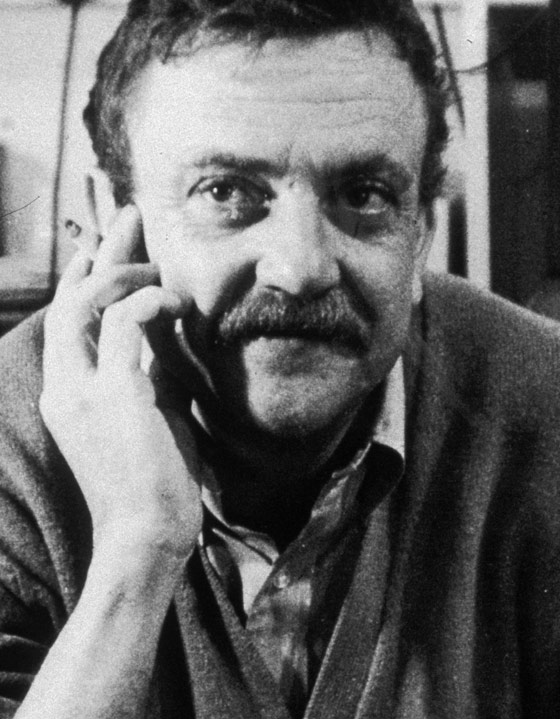
After a well-earned day off for Fall Reading Days on the 14th, we'll begin the downhill slide towards December with our sixth novel of the semester, Breakfast of Champions, or Goodbye Blue Monday! (1973). It's a highly-polarizing book within the Vonnegut canon and even the author himself has mixed feelings about it, giving it the grade of C (only his two collections of scattered essays and the novel Slapstick got equal or lower grades) when evaluating his own work in 1981's Palm Sunday.

"Anybody can write a great novel, one great novel," a character observes in Don DeLillo's Mao II, and though it took him six tries to do so, he finally managed to tell his Dresden story on his own terms. Thus, just as the Shah of Bratpuhr asks EPICAC "what people are for" Vonnegut found himself questioning his purpose in the aftermath of the success of Slaughterhouse-Five. "After I finished Slaughterhouse-Five I didn't have to write at all anymore if I didn't want to," he told Playboy in 1973, and even several years before that friends and the media were speculating that he had jettisoned an early version of the novel and was done. That his marriage fell apart soon thereafter and his kids, now all grown up, were leaving home only added to the confusion as he approached his 50th birthday.

A Vonnegut self-portrait taken
 from Breakfast of Champions
Reaching the half-century mark put things in perspective, however, and he reengaged with the novel as a means of "clearing his head of all the junk in there," including attachments to characters from earlier books (cf. Kilgore Trout, Eliot Rosewater, and in name only, Francine Pefko and Kashdrahr Miasma). Even Dwayne Hoover, the car salesman at the heart of the novel, is a re-adaptation of the original character design for Billy Pilgrim (the two novels started as parts of the same project). At the same time, we meet characters here who'll recur through later novels (he entire Hoover family, Fred T. Barry and his mother Mildred, Rabo Karabekian, the Maritimo brothers and even Kazak the dog), and through the creation of Midland City, OH (a counterpart to Illium, NY), Vonnegut set the stage for the latter half of his career: Deadeye Dick would be set there and it would come up in Bluebeard and Galápagos as well.

Beyond that, though, there's a more important catharsis at work, as age has made Vonnegut wiser, but also wearier in the process. As the idealism of the 60s gave way to 70s malaise, as Watergate eroded trust in public officials and Vietnam took more and more lives, and as racism (particularly the well-entrenched prejudices one might easily encounter in flyover America like Midland City) continued to be a divisive force, Vonnegut grew more disillusioned. He'd tried being rational, tried charming his audience with humor, and it hadn't worked, so now he'd be painfully frank and let the ugliness present in American culture be seen plainly.

That's a lot of baggage for one novel, and that's perhaps why it's been easy for me to leave this book off of the reading list until this semester. Still, it's an important book to recon with, and the rawest expression Vonnegut has to offer —going so far as inserting himself into the narrative — which is likely why for every reader that dislikes the book there's one who thinks it's his finest.

Here's our reading schedule for the novel:
  • Mon. October 17: preface to chapter 8
  • Weds. October 19: chapters 9–14
  • Fri. October 21: chapters 15–18
  • Mon. October 24: chapter 19 to epilogue

And here, as usual, are some supplemental readings that might be of interest:
  • Christopher Lehmann-Haupt reviews the novel for The New York Times: [link]
  • Walter James Miller interviews Vonnegut, focusing on Breakfast of Champions in particular, on WNYC-FM in 1974: [link]

Here's a 92nd Street Y podcast featuring Vonnegut's first public reading from the novel three years before its publication:


Like Slaughterhouse-Five and Mother Night, Breakfast of Champions was turned into a film in 1999. Despite featuring an all-star cast, it doesn't have much to recommend it, as you can see from the trailer below. Nonetheless, Consequence of Sound's Blake Goble begs for a worthy remake of the film in a 2015 article: [link]

Sunday, September 25, 2016

Weeks 7–8: Slaughterhouse-Five, or the Children's Crusade: A Duty-Dance with Death (1969)


While Vonnegut identifies Cat's Cradle as his "flagship" (i.e. his favorite of his own books) it's no understatement to call Slaughterhouse-Five his masterpiece — when raking his own books against one another in 1981's Palm Sunday, those two are the only to receive a mark of A+ (though The Sirens of Titans, Mother Night, God Bless You, Mr. Rosewater and Jailbird all get As). Certainly, it's one of his more formally-inventive novels, and one in which his use of science-fiction tropes and cutting-edge postmodern literary technique meld beautifully to produce a narrative that remains true to the horrors Vonnegut witnessed in Dresden as a POW during WWII.

Always a prolific and dedicated writer — God Bless You, Mr. Rosewater, for example, came together in a little over a year — Slaughterhouse-Five posed a serious challenge to Vonnegut, who tried (and failed) for the better part of two decades, to find the right way to tell his Dresden story. This exchange from a composite interview (published by The Paris Review as part of their "Art of Fiction" series in 1977) outlines a very important shift in Vonnegut's approach that granted him the freedom to finish the manuscript (an important anecdote that's also contained in the book itself and gives it its subtitle):
INTERVIEWER

Did you intend to write about [Dresden] as soon as you went through the experience?

VONNEGUT

When the city was demolished I had no idea of the scale of the thing . . . Whether this was what Bremen looked like or Hamburg, Coventry . . . I’d never seen Coventry, so I had no scale except for what I’d seen in movies. When I got home (I was a writer since I had been on the Cornell Sun, except that was the extent of my writing) I thought of writing my war story, too. All my friends were home; they’d had wonderful adventures, too. I went down to the newspaper office, the Indianapolis News, and looked to find out what they had about Dresden. There was an item about half an inch long, which said our planes had been over Dresden and two had been lost. And so I figured, well, this really was the most minor sort of detail in World War II. Others had so much more to write about. I remember envying Andy Rooney, who jumped into print at that time; I didn’t know him, but I think he was the first guy to publish his war story after the war; it was called Air Gunner. Hell, I never had any classy adventure like that. But every so often I would meet a European and we would be talking about the war and I would say I was in Dresden; he’d be astonished that I’d been there, and he’d always want to know more. Then a book by David Irving was published about Dresden, saying it was the largest massacre in European history. I said, By God, I saw something after all! I would try to write my war story, whether it was interesting or not, and try to make something out of it. I describe that process a little in the beginning of Slaughterhouse Five; I saw it as starring John Wayne and Frank Sinatra. Finally, a girl called Mary O’Hare, the wife of a friend of mine who’d been there with me, said, “You were just children then. It’s not fair to pretend that you were men like Wayne and Sinatra, and it’s not fair to future generations, because you’re going to make war look good.” That was a very important clue to me.

INTERVIEWER

That sort of shifted the whole focus . . .

VONNEGUT

She freed me to write about what infants we really were: seventeen, eighteen, nineteen, twenty, twenty-one. We were baby-faced, and as a prisoner of war I don’t think I had to shave very often. I don’t recall that that was a problem.
Later in the same interview, he speaks about Dresden in comparison to the Holocaust, and attempts (with a combination of survivor's guilt and his trademark black humor) to address the senseless scale of destruction and his place in relation to it:
INTERVIEWER

It was the largest massacre in European history?

VONNEGUT

It was the fastest killing of large numbers of people—one hundred and thirty-five thousand people in a matter of hours. There were slower schemes for killing, of course.

INTERVIEWER

The death camps.

VONNEGUT

Yes—in which millions were eventually killed. Many people see the Dresden massacre as correct and quite minimal revenge for what had been done by the camps. Maybe so. As I say, I never argue that point. I do note in passing that the death penalty was applied to absolutely anybody who happened to be in the undefended city—babies, old people, the zoo animals, and thousands upon thousands of rabid Nazis, of course, and, among others, my best friend Bernard V. O’Hare and me. By all rights, O’Hare and I should have been part of the body count. The more bodies, the more correct the revenge.

INTERVIEWER

The Franklin Library is bringing out a deluxe edition of Slaughterhouse Five, I believe.

VONNEGUT

Yes. I was required to write a new introduction for it.

INTERVIEWER

Did you have any new thoughts?

VONNEGUT

I said that only one person on the entire planet benefited from the raid, which must have cost tens of millions of dollars. The raid didn’t shorten the war by half a second, didn’t weaken a German defense or attack anywhere, didn’t free a single person from a death camp. Only one person benefited—not two or five or ten. Just one.

INTERVIEWER

And who was that?

VONNEGUT

Me. I got three dollars for each person killed. Imagine that.


Slaughterhouse-Five was made into a film in 1972 — an ambitious and faithful adaptation that pleased the author immensely: "I love [director] George Roy Hill and Universal Pictures, who made a flawless translation of my novel Slaughterhouse-Five to the silver screen ... I drool and cackle every time I watch that film, because it is so harmonious with what I felt when I wrote the book." Here's an extended trailer:


Here's our reading schedule for the next three classes:
  • Weds. October 5: chapters 1–2
  • Fri. October 7: chapters 3–4
  • Mon. October 10: chapters 5–7
  • Weds. October 12: chapters 8–10

Additionally, here are a few supplemental links for your enjoyment:
  • The aforementioned (and highly-recommended) Paris Review "Art of Fiction" interview: [link]
  • The New York Times' review of Slaughterhouse-Five: [link]
  • Harlan Ellison's 1969 review of the book in The Los Angeles Times: [link]
  • a 2007 NPR tribute to Vonnegut featuring the author reading an excerpt from Slaughterhouse-Five: [link]
  • a 2003 NPR interview with Vonnegut about Slaughterhouse-Five: [link]
  • Vonnegut's May 1945 letter to his family in Indianapolis from a Red Cross camp in France: [link]
  • A 1949 letter of rejection from The Atlantic Monthly, to whom Vonnegut had sent two stories, along with an account of his experiences in Dresden: [link]
  • Wikipedia entry on the Dresden bombing: [link]
  • Vonnegut speaks in Chicago on the 50th anniversary of the bombing of Hiroshima:

    Wednesday, September 14, 2016

    Weeks 6–7: God Bless You, Mr. Rosewater, or Pearls Before Swine (1965)


    Though Vonnegut's writing career began in earnest in 1950 (with the publication of "Report on the Barnhouse Effect") he wouldn't gain public renown or financial comfort until the mid-to-late 1960s, and if not for an invitation to teach at the prestigious Iowa Writers Workshop in the fall of 1965 (not long after the publication of God Bless You, Mr. Rosewater), he might've given up on writing entirely. Nonetheless, the 60s represent the high water mark for Vonnegut's writing — specifically the trifecta of Cat's Cradle, God Bless You, Mr. Rosewater and Slaughterhouse-Five — and after the widespread success of that final book, he'd spend much of the 1970s in a tailspin, struggling with questions of his public persona, artifice and substance. It wasn't until a massive aesthetic reinvention, starting with Jailbird and continuing through Deadeye Dick, Galapagos and Bluebeard that he'd regain the fine fictional form of this earlier period.

    Though the titular Eliot Rosewater is our protagonist, Vonnegut tells us in the novel's opening sentence that "[a] sum of money is a leading character in this tale about people, just as a sum of honey might properly be a leading character in a tale about bees." Specifically, he's talking about $87,472,033.61 (a lot of money then and now). Eliot is the primary trustee of the Rosewater Foundation — a philanthropic organization set up by his father, an Indiana senator, as a tax shelter — to whom the money belongs. At the heart of the novel is the question of qualities such as charity, fellowship, selflessness and generosity (as embodied by Eliot) and the place they occupy in a capitalist society. These concerns are perhaps even more important now than they were in the mid-60s, when Vonnegut's quaint sociological notions about humankind's duties to one another captured the imagination of young readers.

    As Vonnegut slowly but surely worked his way towards being able to write Slaughterhouse-Five, we learn that Eliot, like Vonnegut, is scarred by his experiences during WWII and a major part of how he comes to terms with that is by valorizing the role firefighters play in society. Vonnegut himself had been a volunteer firefighter in the hamlet of Alplaus while he worked at GE, and his own admiration for them is mirrored in the novel, where he observes that they are:
    almost the only examples of enthusiastic unselfishness to be seen in this land. They rush to the rescue of any human being, and count not the cost. The most contemptible man in town, should his contemptible house catch fire, will see his enemies put the fire out. There we have people treasuring people as people.
    Two prints by artist Tim Doyle of one of Vonnegut's most famous quotations (taken from this novel).
     God Bless You, Mr. Rosewater also serves as our first introduction to Kilgore Trout, one of Vonnegut's most-cherished creations. As depicted in the Arena documentary we watched on the first day of class, Trout is a prolific science fiction writer — author of more than 117 novels and 2000 short stories — albeit not one who has gained either critical or financial recognition: his work is usually published as filler in pornographic magazines. Eliot Rosewater is a diehard fan of his work, however, and through his influence, so is Billy Pilgrim, protagonist of Slaughterhouse-Five. He'll also appear in that novel, as well as Breakfast of Champions, Jailbird, and Timequake, while Galapagos is narrated by the ghost of Trout's son, Leon Trotsky Trout. In 1975, Trout even published a novel in the real world, Venus on the Half-Shell (shown at right), though contrary to popular belief, the book wasn't written by Vonnegut, but rather a little-known science fiction author, Philip JosĂ© Farmer. While Vonnegut had given Farmer permission to use Trout's name, he'd soon grow to regret that decision as casual fans and dedicated readers alike couldn't tell the difference between the two authors.

    Like Trout, Eliot Rosewater would also become one of Vonnegut's favorite recurring characters, showing up again in our next two novels, Slaughterhouse-Five and Breakfast of Champions, as well as the later novel Hocus Pocus (which won't be part of our reading list this semester).

    Here's our reading schedule for the book:

    • Mon. September 26: chapters 1–4
    • Weds. September 28: chapters 5–8
    • Fri. September 30: chapters 9–11
    • Mon. October 3: chapters 12–14


    And here are a few supplemental links:
    • "Do Human Beings Matter?," Martin Levin's New York Times review of the book: [link]
    • A lovely essay in The New Inquiry on "Vonnegut's Firefighters," including his thoughts on the first responders who perished on 9/11: [link]
    • A second essay called "Vonnegut's Firefighters," this one by Gregory Sumner: [link]
    • The title of Vonnegut's 1999 collection of NPR vignettes, God Bless You, Dr. Kevorkian, consciously parodies this book: [link]
    In the late-70s, God Bless You, Mr. Rosewater was adapted into (I kid you not) a Broadway musical. Here's video of its opening act:


    And here's footage from its summer 2016 revival:


    A Playbill behind-the-scenes article on the show can be found here: [link]


      Friday, September 9, 2016

      Class Canceled 9/9

      Please accept my sincerest apologies for having to cancel class today. Thanks to my lovely little germ bomb I've picked up some sort of nasty virus that's knocked me off my feet, and even if I could drag myself in to campus I wouldn't want to put you at risk of catching it.

      We'll pick up on Monday combining that day's readings and today's, with responses from both day's scheduled respondents. If you have any questions, drop me a line, and again, I'm sorry to have to cancel class.

      Friday, September 2, 2016

      Weeks 4–5: Cat's Cradle


      After jumping forward almost a decade between Player Piano and Mother Night our next book comes just two years later. Cat's Cradle was the first novel to bring Kurt Vonnegut to the attention of wider audiences (even though it would take several years to achieve that popularity). Graham Greene would hail the book as "one of the three best novels of the year by one of the most able living writers," and Vonnegut himself, in a 2000 interview with the Harvard Crimson, named the book as his "flagship."

      I've already discussed Vonnegut's disdain for his work being labeled as science fiction (note the prominently placed label on the book cover to the right), and as was the case with Player Piano, this is by no means a tired exercise in that genre, but rather a book that's firmly rooted in the realm of science, which it uses as a satirical weapon against contemporary society. Likewise, it was largely inspired by the author's time as a GE public relations agent in Schenectady, NY (which again returns as the fictional city of Ilium), where scientists were hired to do "pure research" — i.e. to work on whatever pet projects might interest them — and Vonnegut's job was to interview them in search of human interest stories. One scientist in particular, Nobel Prize-winner Irving Langmuir, who worked alongside Bernard Vonnegut on a groundbreaking cloud-seeding project and would serve as the foundation of Dr. Felix Hoenikker, who sets the novel's action in motion. In fact, ice-nine, the dangerous substance at the heart of the novel, was a fabulation of Langmuir's, devised to entertain visiting science fiction author H.G. Wells in the early 30s.  Charles Shields gives us the details:
      Cat's Cradle appeared in 1963, after a long gestation, but the idea for it had occurred to Kurt as far back as his days at General Electric. A story often repeated at the Schenectady plant concerned H. G. Wells's visit in the 1930s. The head scientist, Irving Langmuir, had proposed an idea to Wells for a story about a form of water that solidified at room temperature. Wells, the most famous science fiction writer of the day, expressed interest, but his novels, at their core, were parables about humanity — a scientific conundrum didn’t interest him. 
      Kurt, on the other hand, was intrigued by Langmuir's suggestion. Taking the concept a step further, he asked: what if water, the most common liquid on the planet, could be weaponized, the way that matter torn apart by nuclear fission had created the atomic bomb? At a party of mostly General Electric scientists and their wives one evening, Vonnegut described his idea to a crystallographer, explaining that humanity, in his story, would be threatened by water becoming stable like ice at room temperature. The scientist nodded and went over to a chair. He sat there, ignoring the talk and laughter, just thinking. Finally, as things were winding down, he returned and said, "No. There could be no such ice." 
      Vonnegut might have put the idea aside except that his brother Bernard's cloud seeding experiments at General Electric convinced him that weather modification raised ethical issues more important than how water actually crystallizes. In 1952, the Cape Cod Standard-Times had interviewed Kurt about his next novel after Player Piano. "'Actually,' Mr. Vonnegut said in a worried tone, 'the atmosphere can be fouled up by anybody with an oil burner pointing at the right kind of cloud.' The situation is so explosive that he believes restrictive legislation is needed everywhere right now.'"

      Again, much like Player Piano, we see faith as a driving force in Cat's Cradle, here taking the form of Bokononism, through which Vonnegut is able to trace the role of religion in society and the balance between church and state. However, while Vonnegut was an avowed atheist / humanist / freethinker, his views towards religion — as well as towards other folk social groups (cf. the various lodges [the Moose, the Parmesans, etc.] as well as the Meadows teams and the Ghosts Shirt Society in Player Piano; the concept of nationalism and particularly Nazi ideology in Mother Night) were quite sympathetic, honed by his (incomplete) graduate studies in Anthropology at the University of Chicago. While his first thesis (on the correlation between Cubist painting and Native American uprisings) was turned down Vonnegut eventually convinced (or publicly shamed) the University to accept Cat's Cradle in lieu of a formal thesis and granted him his degree. In particular, the interplay between faith and technology (especially the apocalyptic power of technology in the atomic era) — along with its influence on questions of predestination and free will — are worth keeping an eye on here.

      Here's the reading schedule for the novel:
      • Fri. September 16: Ch. 1, "The Day the World Ended," to Ch. 34, "Vin-Dit"
      • Mon. September 19: Ch. 35, "Hobby Shop" to Ch. 66, "The Strongest Thing There Is"
      • Weds. September 21: Ch. 67, "Hy-u-o-ook-kuh!" to Ch. 94, "The Highest Mountain"
      • Fri. September 23: Ch. 94, "I See the Hook" to Ch. 127, "The End"
      And here are a few supplemental links for this week:
      • Wikipedia page on Bokononism (includes a glossary): [link]
      • The Books of Bokonon: [link]
      • author and screenwriter Terry Southern reviews Cat's Cradle in The New York Times: [link] 
      • Benjamin Kunkel's 2008 appreciation of the novel in The Guardian: [link]
      • Wampeters, Foma and Granfalloons (Opinions) (1974), Vonnegut's first volume of collected nonfiction pieces, takes its name from three Bokononist key terms: [link]

      Wednesday, August 24, 2016

      Weeks 3–4: Mother Night


      Vonnegut's third novel, Mother Night, first published in 1961, is an orphaned work of sorts. As Doris Lessing notes in her 1973 New York Times review of the book, noting that it's "the Vonnegut book that has not been reviewed anywhere, ever, because it was sold first into paperback for a handy sum: he needed the money for his large family. And paperbacks don't get reviewed, so it has been ordained." Beyond that, as The Nation points out, "The book is anomalous in Vonnegut's oeuvre, his only novel not to feature elements of the fantastic, and in that sense and others — its sober tone, its attempt to depict mature love — his most adult."

      Charles Shields gives us the basic setup for the novel: 
      The protagonist is Howard W. Campbell Jr., an American imprisoned in Tel Aviv, accused of having aided the Nazis. Vonnegut imagined him as someone like William Joyce, the Irishman nicknamed "Lord Haw Haw" who broadcast during the war from Berlin. Kurt had listened to him while stationed in England, wondering what could motivate a turncoat. The other inspiration was the phony Red Cross worker in Dresden who tried to recruit POWs for combat on the Russian front by promising better food and clothing. Perhaps, Vonnegut imagined, he wasn't a German actor with an impeccable English accent, but an American engaged in a complicated double cross.
      The book is framed as Campbell's autobiography, for which Vonnegut has served as editor. A latter edition, which contains a separate introductory note penned in 1966, offers some new insights to frame the book's contents: "This is the only story of mine whose moral I know. I don't think it's a marvelous moral; I simply happen to know what it is: We are what we pretend to be, so we must be careful about what we pretend to be." Recall these lines when we get to Slaughterhouse-Five, where they'll be echoed in his discussion of the long and arduous process of coming to terms with his experiences in WWII (n.b. Campbell makes an appearance as well). Still, it would take Vonnegut another eight years to reach that point. In Mother Night, we see his first book-length effort to work through his personal history and the nation's as well.

      Here's our reading schedule for Mother Night:
      • Mon. September 5: No Class — Labor Day
      • Weds. September 7: introduction, editor's note, chapters 1–13
      • Fri. September 9: chapters 14–25
      • Mon. September 12: chapters 26–36
      • Weds. September 14: chapters 37–45

      And here are a few supplemental resources:
      • "The Guest Word" — Doris Lessing's NYT review of Mother Night: [link]
      • a brief essay on the novel at Alphabet Rain: [link]
      • Wikipedia entry on Lord Haw-Haw: [link]
      • the trailer for a 1996 film adaptation of the book: [link]


      Sunday, August 21, 2016

      Weeks 1–2: Player Piano


      Vonnegut's first novel, Player Piano, was first published by Charles Scribners and Sons in 1952, only two years after he first started placing stories in "slicks" — popular weekly magazines that catered to large audiences and provided writers with ample and lucrative opportunities to see their stories in print. This early financial success provided the motivation Vonnegut needed to quit his public relations job at General Electric in Schenectady, NY and move to Cape Cod to pursue writing full-time, however the periodical market dried up not long thereafter. Here's Vonnegut's own description of that time period, from the preface to Bagombo Snuff Box:
      There was a crazy seller’s market for short stories in 1950. There were four weekly magazines that published three or more things in every issue. Six monthlies did the same.

      I got me an agent. If I sent him a story that didn’t quite work, wouldn’t quite satisfy a reader, he would tell me how to fix it. Agents and editors back then could tell a writer how to fine-tune a story as though they were pit mechanics and the story were a race car. With help like that, I sold one, and then two, and then three stories, and banked more money than a year’s salary at GE.

      I quit GE and started my first novel, Player Piano. It is a lampoon on GE. I bit the hand that used to feed me. The book predicted what has indeed come to pass, a day when machines, because they are so dependable and efficient and tireless, and getting cheaper all the time, are taking the halfway decent jobs from human beings. [...]

      But three years after I left Schenectady, advertisers started withdrawing their money from magazines. [...] One monthly that had brought several of my stories, Cosmopolitan, now survives as a harrowingly explicit sex manual.
      Vonnegut in 1952.
      Player Piano revisits themes that should be familiar after today's readings, namely, as the cover copy reads, "America in the Coming Age of Electronics," and just as importantly, the place of humans within this technocratic society, and aside from general nuclear anxieties, much of Vonnegut's interest in rapidly-advancing technology was born of his experience at GE, as filtered through a mild sibling rivalry with his pragmatic brother, Bernard, a star scientist for the organization who, among other achievements, discovered a process for cloud seeding. The humanist vs. scientist dynamic was an active one in the Vonnegut family — for example, influenced by Bernard's analytic nature, Vonnegut's father would force him to major in chemistry at Cornell, turning down a dream job in journalism. Likewise, there's an interesting analogue in Vonnegut's longtime association with the science-fiction genre — something he disdained as an attempt to marginalize his writing and diminish the sharpness of his social commentary.  Writing on the topic in The New York Times in 1965, he observes:
      Years ago I was working in Schenectady for General Electric, completely surrounded by machines and ideas for machines, so I wrote a novel about people and machines, and machines frequently got the best of it, as machines will. (It was called Player Piano, and it's coming out in hard covers again next spring.) And I learned from the reviewers that I was a science-fiction writer.

      I didn't know that. I supposed that I was writing a novel about life, about things I could not avoid seeing and hearing in Schenectady, a very real town, awkwardly set in the gruesome now. I have been a sore-headed occupant of a file-drawer labeled ''science- fiction'' ever since, and I would like out, particularly since so many serious critics regularly mistake the drawer for a tall white fixture in a comfort station. 

      The way a person gets into this drawer, apparently, is to notice technology. The feeling persists that no one can simultaneously be a respectable writer and understand how a refrigerator works, just as no gentleman wears a brown suit in the city.
      If you're wondering what Utopia 14 is, by the way, it was Bantam's 1954 attempt to cash in on the popularity of science fiction pulp novels, rebranding Player Piano to appeal to that market (note the futuristic city/machine/spaceship thingy[?], the alien-like creatures, the unforgiving landscape, the enigmatic hero). Vonnegut was justifiably angered by this, however the book wasn't republished under its original title until 1966, after the success of Cat's Cradle.

      General Electric would also greatly influence Cat's Cradle, in which Dr. Felix Hoenikker was based on Nobel Prize-winner Irving Langmuir (one of Bernard's colleagues), and while GE is proud to acknowledge that (scroll down), they aren't as eager to own up to the more critical depiction in Player Piano.

      Here's our reading schedule for the week:

      • Fri. August 26: chapters 1–8
      • Mon. August 29: chapters 9–18
      • Weds. August 31: chapters 19–25
      • Fri. September 2: chapters 26–35

      and here are a few supplemental links:
      • Granville Hicks' New York Times review of Player Piano: [link]
      • "The Invention of Kurt Vonnegut" — a discussion of the author's time at GE: [link]
      • Vonnegut on science fiction, GE and Player Piano (from a 1973 Playboy interview): [link]
      • Vonnegut on Player Piano, "technology and cheesy little religions" (from a 1973 interview with Robert Scholes): [link]
      • Wikipedia entry on ENIAC, the world's first general-purpose computer, developed at the University of Pennsylvania in 1947 (and most likely a real-world analogue for EPICAC): [link]